
A better way to use what your kitchen throws out
Chef Matt Jozwiak on turning food waste into community meals
• public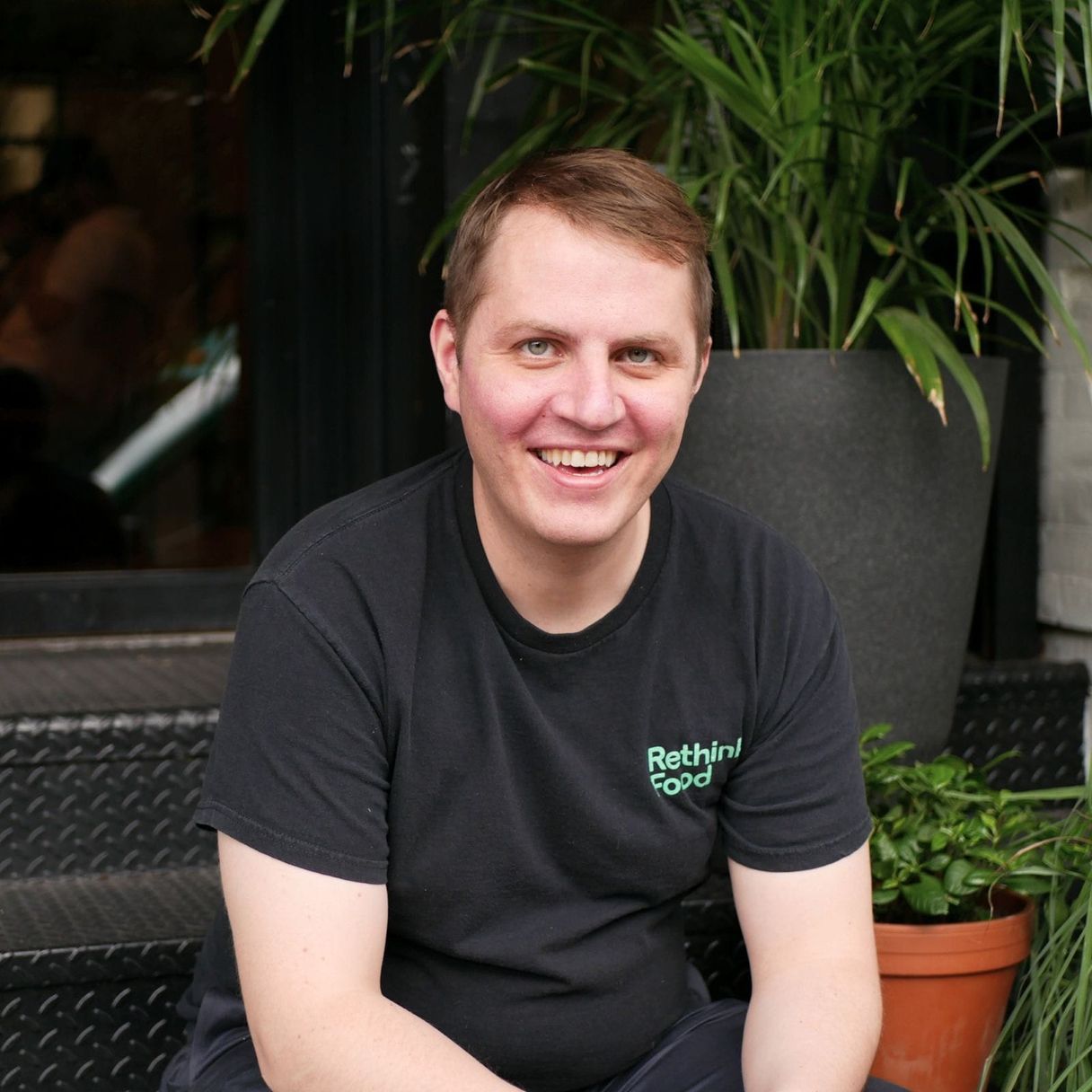
After years in some of the world’s most exacting kitchens, Matt Jozwiak began to question where hospitality could go next—namely, could it serve a greater purpose?
The former dishwasher-turned-chef, raised in Kansas and trained in Lyon, Jozwiak worked in acclaimed kitchens like Noma, The NoMad and Eleven Madison Park (EMP). He’s now applying that ethos to a larger mission with Rethink Food, a nonprofit he started with EMP’s Daniel Humm that partners with restaurants to provide meals to communities facing food insecurity while reinvesting in local food businesses.
In this conversation, he discusses transforming food waste into opportunity, scaling a chef-led model without sacrificing dignity or quality and why initiatives like Rethink Certified aim to embed community impact into the fabric of the industry.
—Interview by Kelly Dobkin, edited by Bianca Prieto
You started your career as a dishwasher and worked in some of the world’s top kitchens before founding Rethink Food. What inspired you to pivot from fine dining to tackling food insecurity, and how did your time at Eleven Madison Park shape that vision?
Working in some of the world’s top kitchens was an incredibly formative experience and ultimately helped shape Rethink Food. Those restaurants operate with precision, excellence and hospitality. At the same time, I saw how much perfectly good food never made it to the plate—whether for aesthetics, overproduction to maintain consistency or surplus from events. It wasn’t intentional waste; it was simply a system that had not been designed to redirect food where it was needed most.
My time at Eleven Madison Park especially shaped how I think about hospitality. At its core, hospitality is about care—making people feel welcomed and valued. At EMP, that spirit extended not only to guests but also to the team. There was a real sense that people were included, respected and part of something bigger. That idea stayed with me and eventually led to a bigger question: what would happen if we extended the same level of care beyond the dining room and into our communities?
Rethink Food grew out of that idea—the belief that restaurants are uniquely positioned to be part of the solution. I wanted to build an organization rooted in that same sense of kindness, openness and inclusion while leveraging the talent, infrastructure and creativity of restaurants to address food insecurity in a way that supports both communities and local food businesses.
Rethink Food has provided over 34 million meals and supported local food businesses with $157 million in funding. What strategies or principles have been key to scaling impact while staying true to your chef-led, community-focused approach?
Since the very beginning, our approach has been about working with the food system that already exists rather than trying to replace it. Restaurants, local food businesses and community organizations already have the infrastructure, talent and relationships needed to make an impact.
By partnering with restaurants and food businesses, we’re able to direct resources back into local economies while providing high-quality meals to communities experiencing food insecurity. That chef-led model has been key to scaling our impact. Chefs understand how to work efficiently, creatively and at scale without losing sight of quality, dignity or care in the food they prepare.
Another important principle has been listening to community partners. They understand the needs on the ground far better than we ever could from the outside. Our role is to support them, provide resources and help build systems that make it easier for everyone to participate in the solution. That balance—trusting the expertise of both chefs and community organizations—has been essential to growing in a way that stays true to who we are.
The Rethink Certified program spotlights restaurants and businesses committed to building a more equitable food system. What does it take for a restaurant to achieve this certification, and how do you see it influencing the industry at large?
Rethink Certified is our partner recognition program that highlights restaurants and businesses making a meaningful, ongoing commitment to addressing food insecurity and advancing long-term change in our food system. Certified partners support Rethink Food’s mission in several ways, including donating meals for local communities impacted by food insecurity; contributing financial support; and providing in-kind or product donations.
The goal is to create clear pathways for businesses to participate in the solution. Restaurants already have tremendous influence in shaping culture and the food system. By recognizing and elevating those who are taking action, we hope to encourage more businesses across the industry to see community impact not as something separate from their work, but as a natural extension of hospitality. We’re always looking to grow our network of Rethink Certified partners with like-minded restaurants.
Looking ahead, how do you envision Rethink Food evolving over the next five years, and what role do you hope restaurants will play in creating a more sustainable and equitable food ecosystem?
Over the next five years, I see Rethink Food continuing to focus on building systems that make it easier for restaurants, community organizations and policymakers to work together to address food insecurity.
We’ve learned that the solution isn’t just about providing meals—it’s about creating clear pathways for participation. Restaurants already play a central role in the food system. They have the infrastructure, talent, and creativity to make a real difference. Our goal is to continue building models that make it possible for more restaurants to participate in community impact while also supporting their own sustainability. Ultimately, we hope to help create a food system where access, collaboration and community support are built into how it operates rather than treated as an afterthought.
Thanks for reading today's edition! You can reach the newsletter team at editor@theprep.co. We enjoy hearing from you.
Interested in advertising? Email us at newslettersales@mvfglobal.com
Was this email forwarded to you? Sign up here to get this newsletter once a week.
The Prep is written by Kelly Dobkin and edited by Bianca Prieto.