
A strategic prix-fixe menu
This Chinatown restaurant shifted its pricing to deliver more, for less, to its customers
• public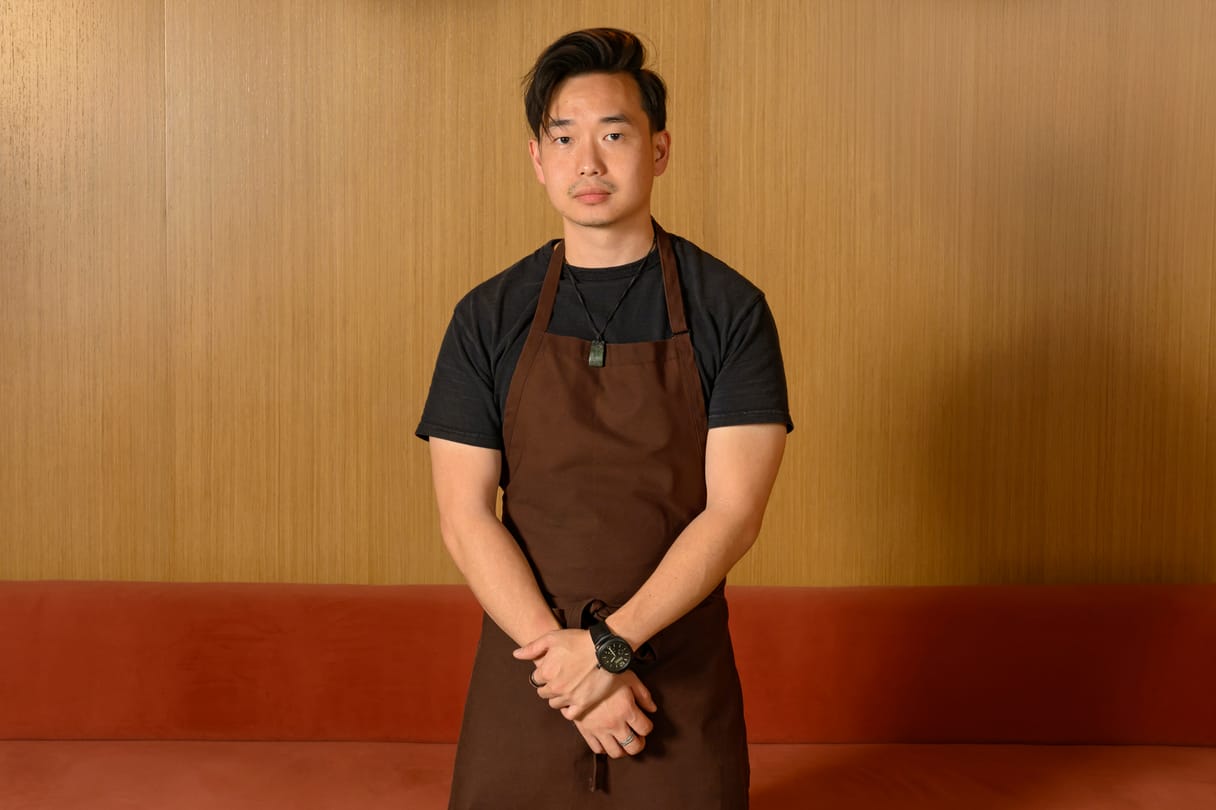

In a dining landscape defined by rising costs and cautious spending, Anthony Wang is making a bold move at L.A.’s Firstborn: simplifying. The chef-owner recently announced that the 11-month-old Chinatown restaurant—inspired by his parents, his American childhood and his travels to China—shifted to a $68 prix fixe format.
The move was designed to encourage exploration while tightening operations behind the scenes. It also brings greater focus and scalability, and reshapes how smaller parties experience his ambitious cooking.
Here, Wang breaks down the business logic and creative freedom behind the pivot.
—Interview by Kelly Dobkin, edited by Bianca Prieto
Moving to a $68 prix fixe is a bold decision. Is there a cost-savings benefit from a business point of view as well, with a set menu in terms of minimizing food waste (or in other ways)?
Focus is a big part of this. Narrowing the choice to three items per course gives us a much more controllable product mix. It becomes easier to predict how much product to order, which innately results in less perishable product lost over time. It also gives us the confidence to be bolder in the menu. It allows us to lean into perhaps unconventional products that diners would typically pass over when given the choice of something more relatable or common: Chicory vs cabbage; sweetbreads vs pork belly.
You’ve said this shift is about making the menu more accessible for solo diners and smaller parties. Was there on-the-floor data that implied that smaller groups were a stronger consumer base at your restaurant (to support the business decision)?
We've come to realize that building a meal on a smaller table is challenging for those who truly want to explore without the fear of overspending or over-ordering. Our most common party size ranges from two to four. And I hear commonly from guests that they try to gather a larger group in order to try more things on the menu during one visit. This format, in theory, allows guests to explore more.
Offering three to four choices per course gives guests flexibility without overwhelming them. How did you approach menu engineering to balance curiosity, food cost and kitchen execution—especially during peak service?
We operate on a blended margin like most do. Certain selections on any given course are certainly more cost-effective than others. Those are the items we typically assume would sell the most based on conventionality, accessibility and approachability. In terms of execution, we put a lot of focus on production and prep. Planning on the scalability of a dish during service is very important for us, so we consider what can be done in advance without sacrificing quality and intention.
Thanks for reading today's edition! You can reach the newsletter team at editor@theprep.co. We enjoy hearing from you.
Interested in advertising? Email us at newslettersales@mvfglobal.com
Was this email forwarded to you? Sign up here to get this newsletter once a week.
The Prep is written by Kelly Dobkin and edited by Bianca Prieto