
Nostalgia-driven dining is putting itself to the test
How a nearly 70-year-old Vegas steakhouse is winning over New York City
• public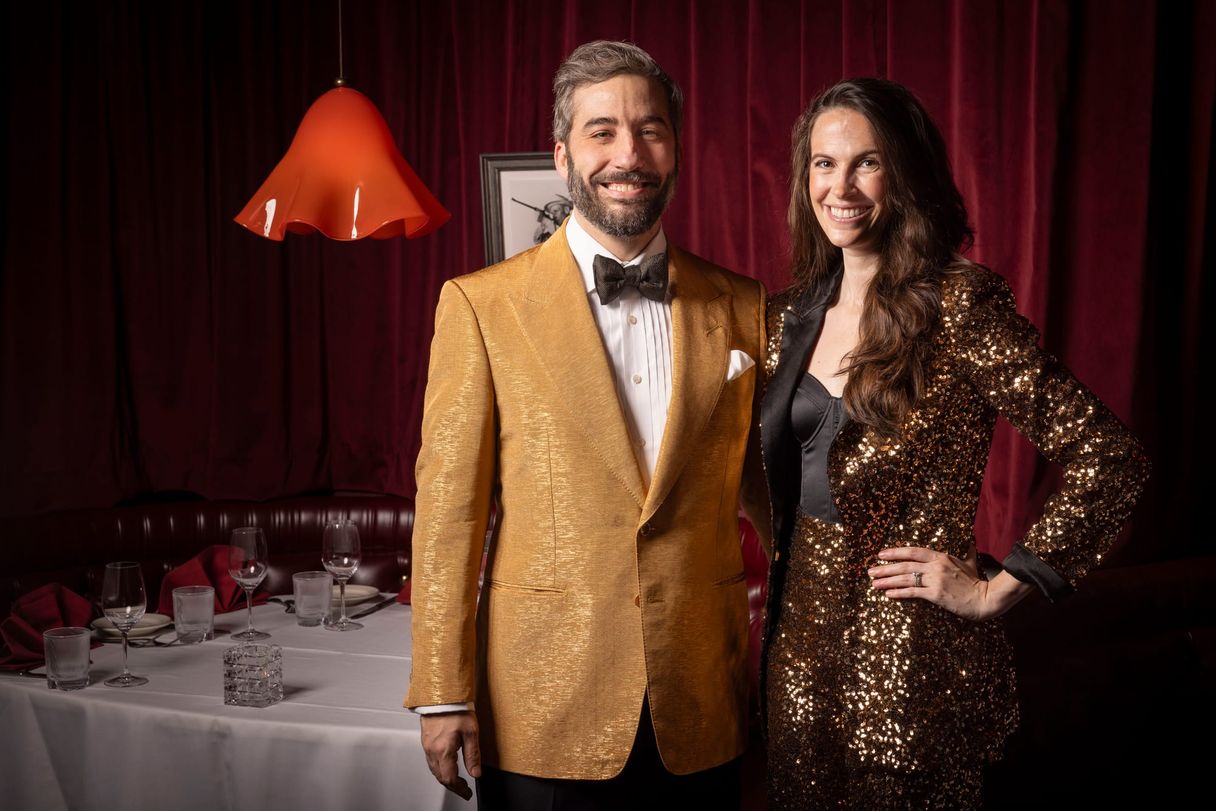
For nearly 70 years, the Golden Steer Steakhouse has been synonymous with old-school Vegas glamour, tableside theatrics and celebrity lore.
Now, owners Amanda Signorelli and Nick McMillan are bringing the iconic steakhouse to New York for the first time, testing whether nostalgia-driven dining can resonate with a new generation. In this conversation, the duo discusses translating a beloved institution across coasts, balancing legacy with reinvention and why the smallest design details—from Caesar salad plates to employee name tags—matter when building an immersive restaurant experience.
—Interview by Kelly Dobkin, edited by Bianca Prieto
Why was 2026 the right moment to expand Golden Steer after so many decades, and what made you choose New York City?
Las Vegas has had a bit of its own moment—F1, Super Bowl, Sphere, Stanley Cup. Many firsts for a city that 20+ years ago was just 400,000 people in the desert. With that, and the surging interest in steakhouses and Golden Steer, we felt this was the perfect moment to bring the Golden Steer experience to a new audience while staying true to our legacy.
When we looked at where our most engaged customers were, there were three cities: Vegas, NYC and LA. Combining our customers with the stories of some of our most iconic patrons, NYC became the answer. Plus, both Nick and I have always wanted to live in this incredible city.
Expanding a nearly 70-year-old institution for the first time is a high-stakes move—what operational or cultural challenges surprised you most in bringing Golden Steer from Las Vegas to NYC, and how did you navigate them?
A 3,000-mile jump was definitely a gamble! Everyone and everything in New York has a perspective, and coming here forced us to aggressively articulate who we are as a brand and as a restaurant. One of the hardest challenges we faced when opening was designing a space that felt like Golden Steer Vegas but also honored and did justice to the rich design history at this iconic building: One Fifth Avenue.
The way we did this was, first and foremost, reconstructing the original #1 bar that had gained so much popularity during the 1930s. We found a postcard with a photo of the bar that became our envelope for design, resulting in a more residential-looking bar and using the same column structures. With regards to the food, we kept the core same as Vegas but then introduced the seasonality that is well known to New York through our menu, including the current Jumbo Asparagus.
There’s a clear appetite right now for nostalgia-driven dining experiences. How do you balance honoring legacy with making the brand feel relevant—and worth the price—for a new generation of diners discovering Golden Steer for the first time?
As the oldest steakhouse on the Las Vegas Strip, “fun” is deeply ingrained in our brand and fortunately, having fun is timeless. Where we find ourselves adapting to this generation of diners is how we tell our story, how diners discover the Golden Steer. As a brand, we only began engaging with social media during COVID. Now we are actively embracing content and creators in a whole new way.
What traditions came with the move (and which ones didn't)? Would love to hear more about how, from a marketing POV, you make those calls.
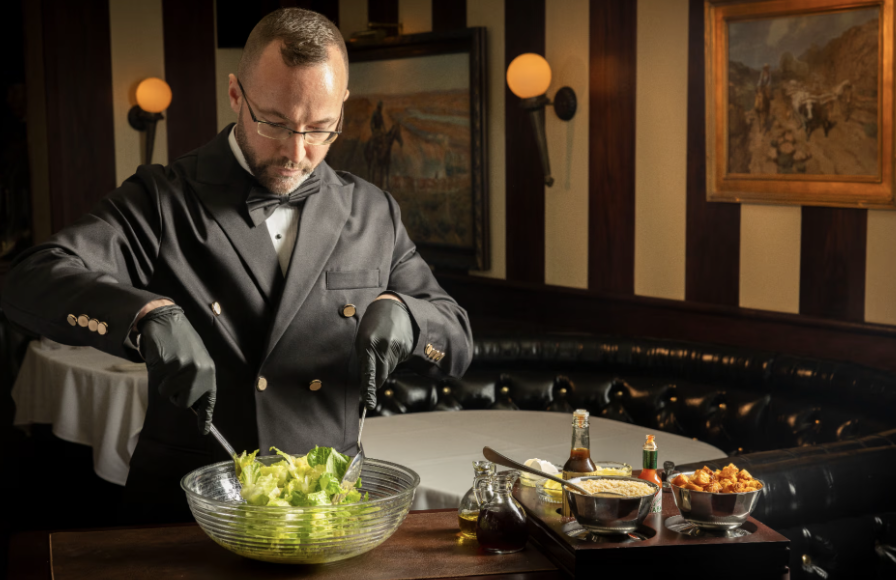
Some traditions were easy to keep: tableside service! Some were harder: Do we keep name tags for employees? Yes. Do we have named booths like we do in Vegas? No.
We spent hours debating some of these finer details, and each decision pushed us farther to clarify who we are as a brand. An example where we leaned in further was our Caesar Salad plates. We are well known for the tableside experience, and we wanted to visually add more attention by bringing dark green lettuce-shaped plates, which are specific to NYC. Our silverware has beaded dots around the edge, which is an ode to the chaser lights outside the restaurant in Vegas.
We felt strongly that the New York audience would appreciate design details and a fixation on all the small elements, so we made sure to get granular and always ask: how does this decision serve the brand, a function, the experience or all three?
(Photo credit: Sabin Orr)
The Prep's Take:
Expanding a decades-old restaurant to a whole new city is no easy task—but with careful planning, smart marketing decisions and proper execution, you can introduce your concept to a whole new market that will embrace it with open arms.
Thanks for reading today's edition! You can reach the newsletter team at editor@theprep.co. We enjoy hearing from you.
Interested in advertising? Email us at newslettersales@mvfglobal.com
Was this email forwarded to you? Sign up here to get this newsletter once a week.
The Prep is written by Kelly Dobkin and edited by Bianca Prieto.