
Chef-driven doesn't have to mean expensive
A Beard semifinalist on building a fast-casual concept that doesn't sacrifice the craft
• public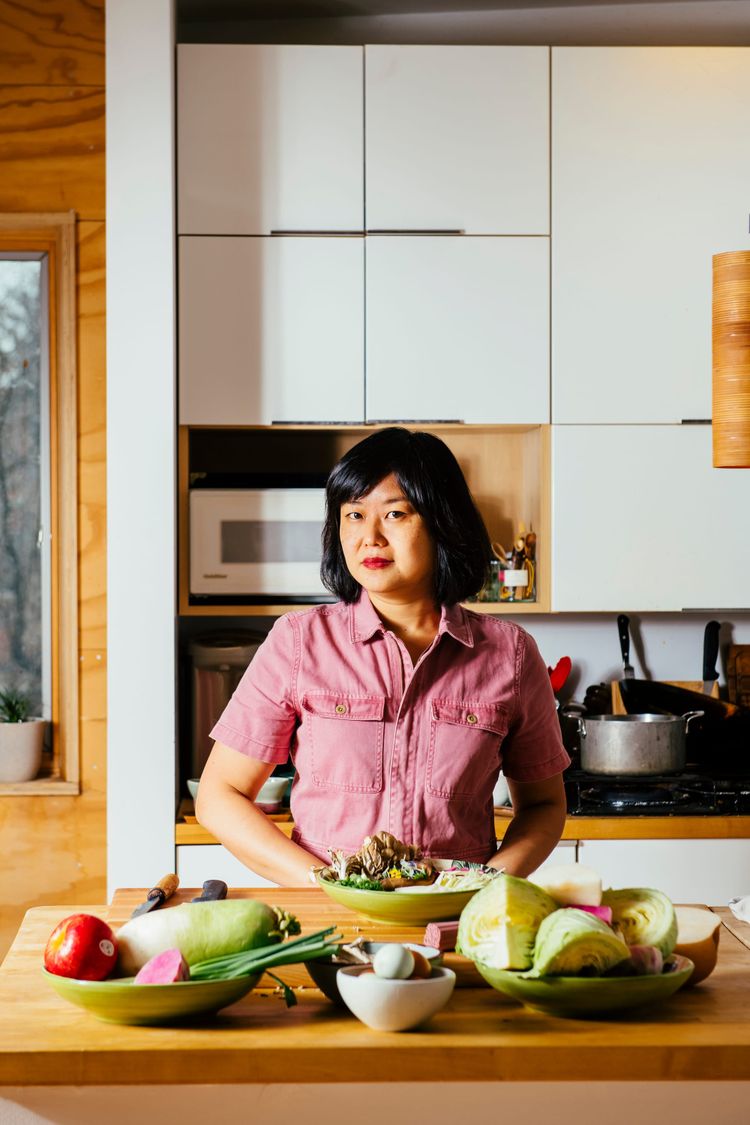
At Ann Arbor’s Miss Kim and spin-off, fast-casual concept, Little Kim, chef-owner Ji Hye Kim navigates the space between tradition and adaptation, channeling Korean culinary philosophy through a distinctly Midwestern lens. Named one of Food & Wine’s Best New Chefs and a five-time James Beard Award semifinalist, we caught up with the lauded chef to discuss evolving heritage dishes, redefining “chef-driven” dining and building a more inclusive, everyday restaurant model grounded in seasonality, mentorship and intention.
—Interview by Kelly Dobkin, edited by Bianca Prieto
At Miss Kim, you reinterpret traditional Korean dishes through a Midwestern lens. How do you decide when to stay strictly rooted in tradition versus when to adapt—especially when working with local Michigan ingredients?
I am a proud immigrant and a Korean American chef. That alone makes it very challenging to stay strictly only rooted in tradition. I am not in Korea, I do not have access to the same ingredients—no decade-old jang made from meju, no salted shrimp harvested only in June for the maximum plumpness, not even napa cabbage grown and harvested in Gangwon Province at high altitude.
So much of food starts with the ingredients, but it is not just a list of ingredients either. Korean culinary traditions, just as many other cuisines with long traditions, dictate that the food is of a time and place. That means that you ought to cook seasonally with ingredients that are from the area you are in.
For example, there are over 200 types of kimchi documented, varying from region to region, incorporating a multitude of ingredients throughout all four seasons. In that sense, when I use local Michigan ingredients, I am indeed following the very tenets of traditional Korean foodways. When I inevitably need to make changes to a traditional dish, I really think about the story and evolution of that dish. Just like the people who have been cooking that dish for decades and centuries, food doesn’t stay static but evolves with time and location.
Even kimchi did not start out with gochugaru (Korean chile powder), because chiles are not native to Korea. So, when I make a dish and it does not look exactly the same as what it usually looks like today, I start with looking into the arch of that dish, the story and essence of that dish. Taking the example of kimchi again, I might incorporate a local Michigan vegetable like beets into a water kimchi, but stay true to how water kimchi is usually made in technique. Even with reinterpretation or use of nontraditional ingredients, I work to find a throughline and stay true to that arc.
(Photo credit Gerard + Belevender)
You came up through Zingerman’s Community of Businesses and its Path to Partnership program. How did that structure shape your leadership style and approach to ownership—and what lessons can independent operators take from that model?
One big takeaway from my experience of becoming a partner through Zingerman’s Path to Partnership and as a business operator is that every staff member is on that path to partnership. Sure, most staff will not decide to go through the path to partnership all the way to become an owner. But each staff member is someone who can potentially be an owner with the right environment and mentorship.
We empower the staff, and the staff feels a sense of ownership in every shift. I think that’s very important. In that sense, the Path to Partnership program works as a mentorship program. What if someone is on the path to partnership and after a point, they do not progress further? Isn't that a staff member who started out as a busser and grew into a shift lead? That’s a win. It also works like a long interview process. What if someone is on the Path to Partnership and decides it is not for them and leaves? That’s the program working exactly as it should, since we found out something is not a good match BEFORE legal ownership happens. It's a process to get to know each other better and work together first. It’s a gentler, smarter approach to adding partners.
What was the impetus to go fast-casual with Little Kim? And how do you interpret your chef-driven style into that format?
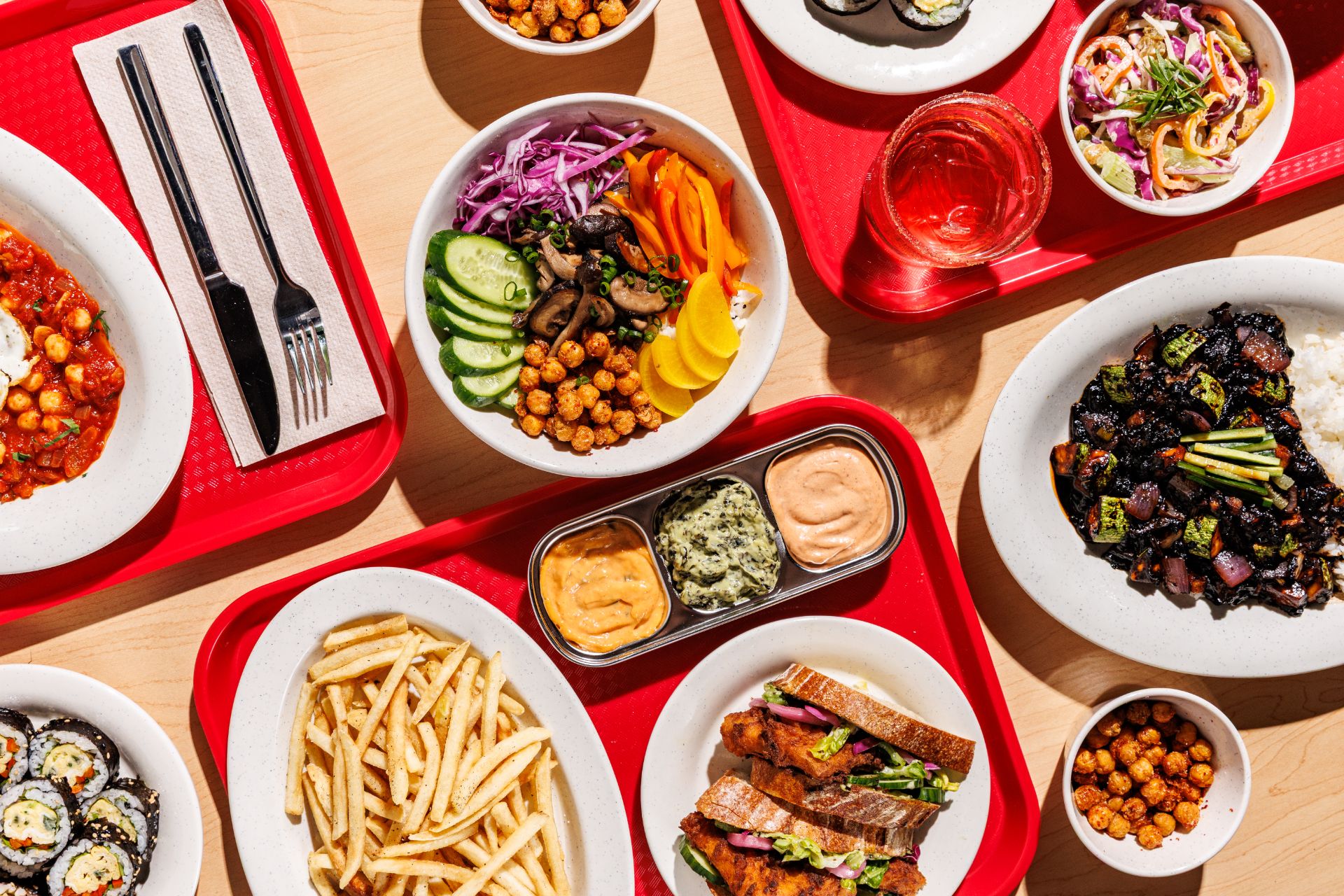
With Little Kim, I wanted to build a more approachable restaurant in terms of price, food and atmosphere—somewhere you can come for lunch three times a week. I want the food to be delicious and healthy enough to eat every day. Chef-driven style does not have to mean fancy, stuffiness or even full service. By taking some extra amenities away and making the restaurant vegetarian fast-casual, I can keep the cost lower and still share really delicious, “chef-driven” food.
How large was the influence of Korean Buddhist temple food on the menu at Little Kim? (If at all!)
It is a big influence! I go to Korea every year, and every time I make sure to stop by a Buddhist temple and really take in the temple food. While not all dishes at Little Kim are Korean Buddhist dishes, the influence of Korean Buddhist food philosophy is everywhere in different ways. Some dishes are vegan and devoid of alliums, like Korean Buddhist temple food. But some dishes present more subtly, with emphasis on fermented flavors and ingredients. I was shocked at how great vegan kimchi, pickles and banchan are at the Buddhist temples—vegan yet full of flavor and texture. I try to remember that every time we put a dish on the menu. It’s a big inspiration for Little Kim.
The Prep's Take
The talent you need to grow your operation might already be on your floor. Kim's takeaway from Zingerman's Path to Partnership program is straightforward: treat every staff member as a potential leader, build the environment that lets them grow into it, and let the process tell you who's ready before any legal or financial commitment is made. For independent operators who can't always afford to hire from outside, that's not a philosophy, it's a hiring strategy.
Thanks for reading today's edition! You can reach the newsletter team at editor@theprep.co. We enjoy hearing from you.
Interested in advertising? Email us at newslettersales@mvfglobal.com
Was this email forwarded to you? Sign up here to get this newsletter once a week.
The Prep is written by Kelly Dobkin and edited by Bianca Prieto.